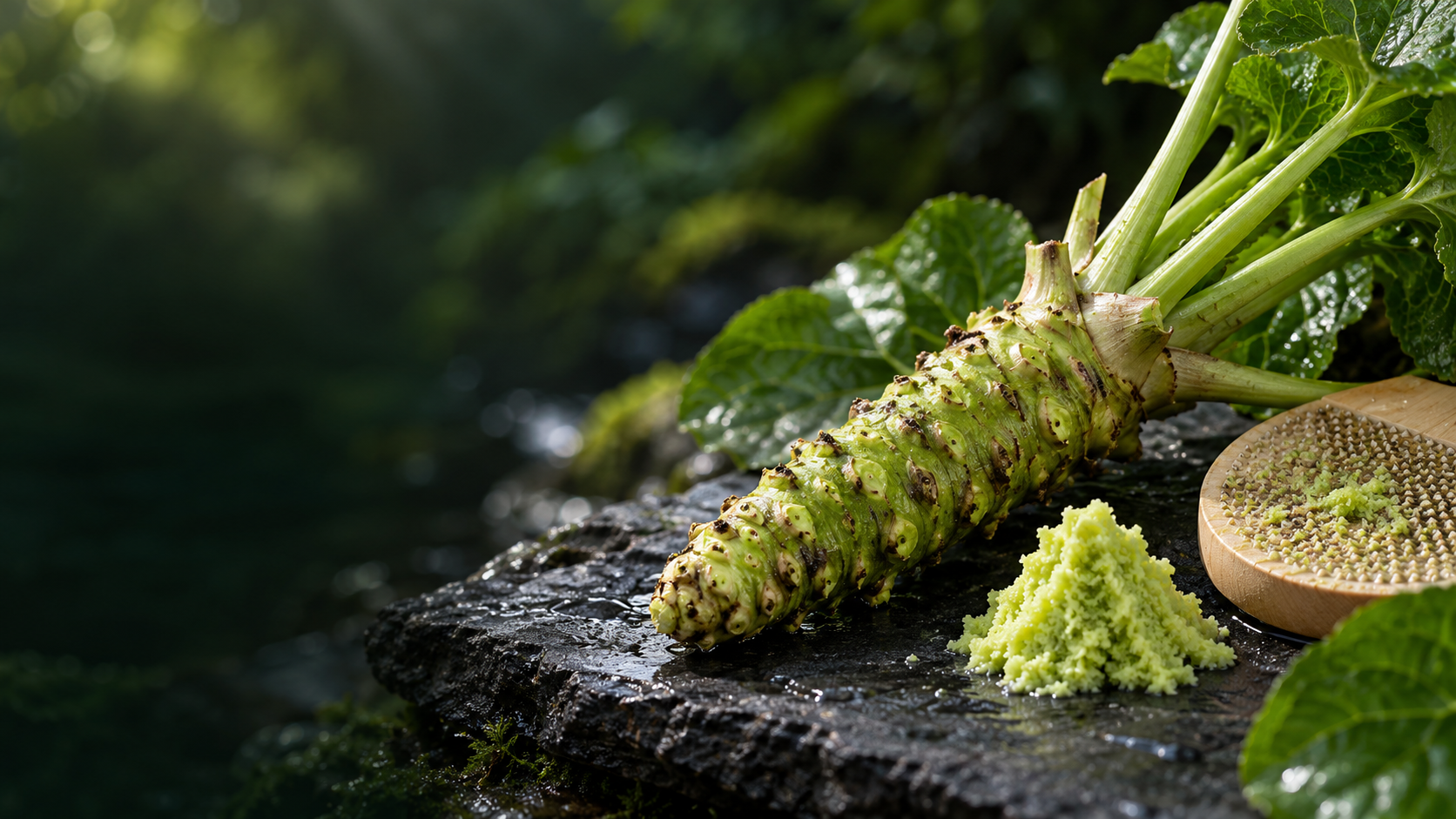
A little wasabi.
A new perspective.
More than heat. A fresh ingredient to explore.
From a rhizome to tables around the world.
Get to know the real thing.
Small tastings. Thoughtful questions. New possibilities.
Common Mistakes and Solutions When Using Fresh Wasabi
Fresh wasabi is a delicate ingredient whose unique aroma and pungency can be easily diminished by improper handling. Beginners often face challenges in grating, storing, and seasoning with real wasabi. This guide outlines typical mistakes and offers concrete advice to preserve freshness and maximize flavor when using fresh wasabi.
Real wasabi is more than heat.
Start with the ingredient, not a heat contest. Discover a fresh wasabi rhizome through its appearance, aroma and the way you choose to serve it.
Read the label before you choose your wasabi.
When shopping for real wasabi, look at the ingredients and format as well as the name. Similar-looking products can serve different purposes.
Your first fresh rhizome: make grating part of the meal.
Prepare the food and tools before you begin. Your first grating session is a chance to learn a small, enjoyable table-side ritual.
Choose a grater you can use and clean well.
A grater should suit your hands and your routine, not just your table styling. Here is an editorial checklist for a first purchase.
Keep a handling note for your fresh wasabi.
Think beyond a generic shelf-life number. Keep the supplier’s instructions alongside your arrival date and intended use.
Try fresh wasabi with a familiar sushi or sashimi dish.
Use a dish you already enjoy as a starting point. Adjust the wasabi and soy sauce gradually, and discover the bite you prefer.
Put fresh wasabi beside your next steak.
Your first fresh rhizome need not be reserved for sushi. Start with a small tasting alongside a cooked meat dish.
A simple rice bowl for your first wasabi tasting.
Before building a complicated recipe, try a small bowl of rice with fresh wasabi. This is an editorial tasting idea, not a claim of a tested signature recipe.
Explore wasabi with tofu and avocado.
You can explore fresh wasabi without fish or meat. Use this ingredient checklist when planning a tofu or avocado tasting.
Beyond the rhizome: meet wasabi leaves and stems.
The grated rhizome is only part of the plant. If you find leaves or stems, start by checking which part you are buying and how it should be prepared.
Understand the growing story behind wasabi.
Trace the ingredient back to its growing context. Start with the producer’s description of place and method rather than assuming all wasabi has one story.
Read the story of Shizuoka wasabi carefully.
A place name is a starting point. Explore the cultivation system, the people and the information attached to the specific ingredient you buy.
A chef’s first trial: turn a rhizome into a clear menu idea.
Begin with one dish before planning a full menu launch. Use a small trial to create notes that both kitchen and service teams can understand.
Seven questions to ask before sourcing fresh wasabi.
Make your first sourcing conversation more useful than a price request. This editorial checklist helps organise questions for a potential supplier.
Towards a wasabi farm, and tables around the world.
The ambition is to grow hon-wasabi and eventually bring it to overseas tables. This publication is the starting point for learning and preparation.
No matching stories.
A fresh possibility for your kitchen.
From first tasting to sourcing questions. A notebook for chefs curious about fresh Japanese wasabi.
Towards tables around the world.
A future farm and overseas sales are our ambition. For now, we begin with learning and tasting. The project is at the planning stage.