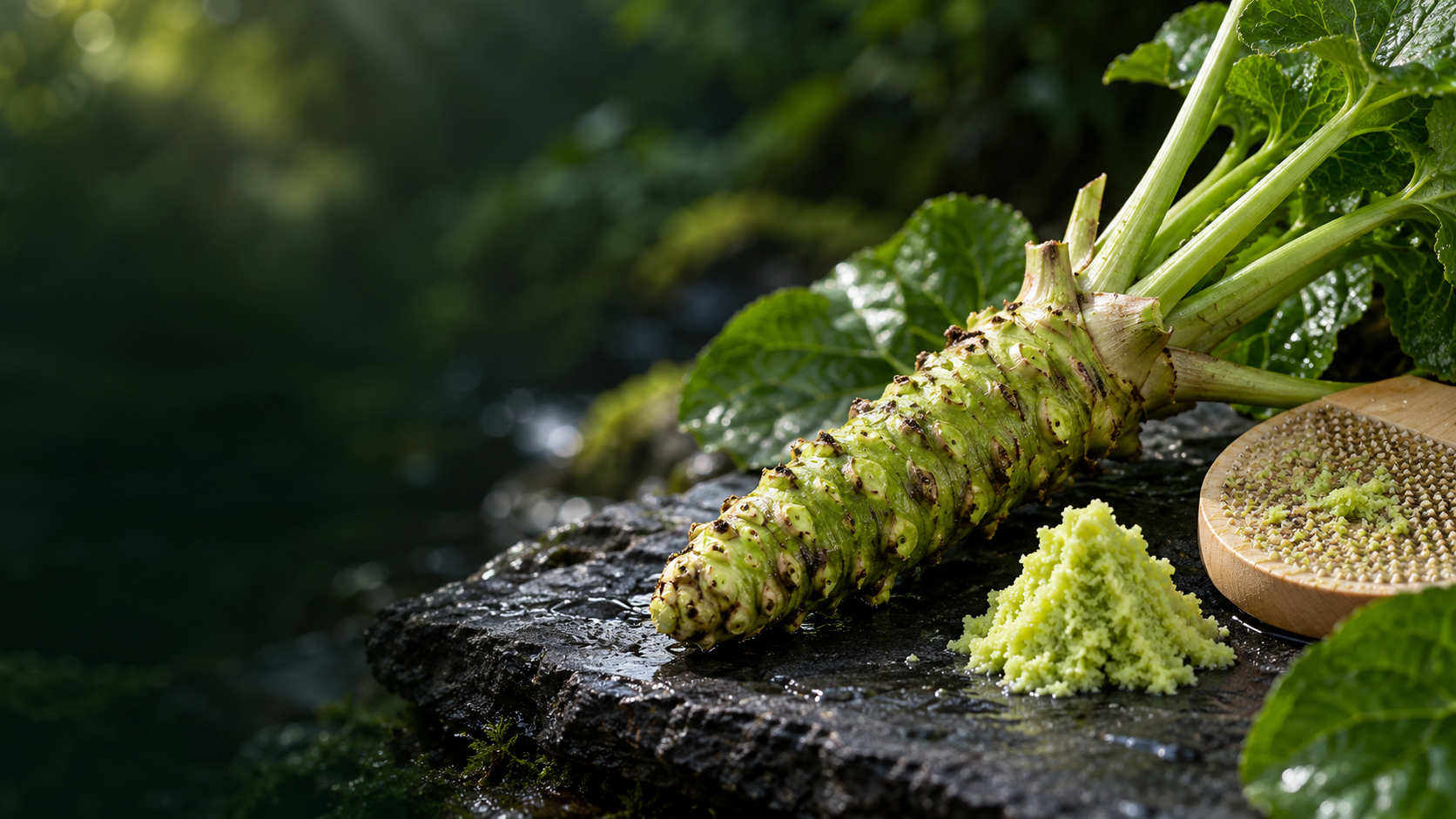
A little wasabi.
A new perspective.
More than heat. A fresh ingredient to explore.
From a rhizome to tables around the world.
Get to know the real thing.
Small tastings. Thoughtful questions. New possibilities.
Environmental Factors Affecting Freshness and Aroma of Real Wasabi
The charm of fresh real wasabi lies in its delicate aroma and freshness, which are highly sensitive to storage conditions. This article explores key environmental factors such as temperature, humidity, and air contact that affect wasabi's quality, and clarifies differences between refrigeration and freezing methods from a scientific perspective.
Are Real Wasabi Leaves Edible? Clear Facts and Safe Usage Tips
While the rhizome of real wasabi is well known, its leaves are also edible but raise safety questions. Based on reliable sources, we explain the edible parts, how to safely enjoy them, and answer common questions about real wasabi leaves' consumption.
How to Enjoy Real Wasabi Leaves: Specific Ways to Eat and Savor Their Flavor
Can you eat fresh real wasabi leaves? This article answers that question based on the Japan Wasabi Association’s knowledge. It explores the leaves’ characteristics and shows various ways to enjoy them—such as in salads, dressings, or condiments—with practical recipes highlighting their versatile taste and culinary use.
Maintaining Freshness of Real Wasabi and Comparing Frozen Products: How to Choose and Use
Real wasabi is delicate and loses its freshness quickly, making proper storage vital. We clarify the characteristics of fresh wasabi preservation and the emerging ultra-low temperature grated frozen wasabi products, providing clear tips on how chefs and consumers can select and use them effectively.
FAQ on the Safety and Edibility of Real Wasabi Leaves
While real wasabi's rhizome is widely known, the leaves are less familiar yet hold culinary interest. This FAQ article summarizes the edible status, safety, and usage tips for wasabi leaves using official sources. It aims to help those curious about novel applications, especially international chefs and food lovers.
Traditional Wasabi Cultivation in Shizuoka and Its Role in Environmental Conservation
Wasabi cultivation in Shizuoka dates back about 400 years to the early Edo period, featuring a unique 'tatami-ishi' method with terraced stone beds irrigated by spring water. This fertilizer-free, sustainable farming method supports local ecosystems by providing habitats for rare species, helping conserve the natural environment. It earned designation as a Globally Important Agricultural Heritage System, emphasizing its cultural and environmental value.
Quality Differences and Usage Tips for Real Wasabi Powder vs. Freshly Grated Wasabi
Real wasabi comes in powder form and as freshly grated rhizome, each with distinct qualities. This article compares their actual quality differences and provides practical advice on how to choose and use them effectively. Including freshness retention tips and key questions, it helps consumers and restaurants make informed decisions suited to varied culinary uses.
Exploring Uses and Flavor Diversity of Fresh Wasabi Leaves
Fresh wasabi leaves offer versatile flavor profiles beyond the root, enriched by Shizuoka’s unique traditional cultivation environment. Drawing from an Italian chef’s experience and regional background, this article introduces diverse uses of wasabi leaves across different cuisines and practical cooking ideas to enjoy their fresh aroma and taste.
Comparing Aroma and Freshness Changes Among Real Wasabi Plant Parts
Real wasabi’s rhizome, leaves, and stems each exhibit unique aroma profiles and freshness durations. Understanding these differences allows chefs and enthusiasts to treat each part correctly during cooking and storage, ensuring optimal taste experience.
Characteristics and Selection of Processed Wasabi Blends Combining Real Wasabi and Western Horseradish
Explore how processed wasabi blends combine the delicate aroma and spiciness of real wasabi with the sharp, lasting heat of western horseradish. Understand their differences, usage, and specific questions to consider when choosing the right product.
Historical Value and Current Conservation of Shizuoka's Traditional Wasabi Fields
Shizuoka Prefecture hosts Japan's oldest cultivated wasabi fields dating back about 400 years to the early Edo period. Their distinctive terraced layout combined with planted alder trees creates a unique landscape supporting biodiversity. This article delves into the conservation strategies and regular expert assessments that ensure the sustainable preservation of these historic agricultural systems.
Handling and Freshness Preservation of Fresh Wasabi: Differences by Plant Part
Fresh wasabi differs in physical characteristics across its root rhizome, leaves, and stems, which require distinct handling and storage methods to retain freshness. This practical guide targets chefs and wasabi lovers seeking specific preservation tips, emphasizing freshness maintenance over flavor differences.
Traditional Wasabi Cultivation in Shizuoka and Its Connection with the Local Ecosystem
Shizuoka's wasabi cultivation dates back over 400 years and is characterized by unique terraced wasabi fields that utilize spring water and minimize fertilizer use. This traditional farming method sustains both the quality of wasabi and the local ecosystem, providing important habitats for rare wildlife.
Delicious Pairings and Practical Uses of Fresh Wasabi
Fresh wasabi enhances dishes with its distinctive aroma and heat, yet its full potential shines when matched thoughtfully with complementary ingredients and cooking methods. Drawing on insights from the Japan Wasabi Association, this article illustrates various pairing examples from sashimi to desserts, along with practical usage tips and questions for kitchen professionals to explore.
Optimal Amounts of Fresh Wasabi to Use with Different Ingredients in Japanese Cuisine
Fresh wasabi is a vital condiment in Japanese cuisine, yet the best quantity varies by ingredient and dish. For example, fattier cuts like tuna toro benefit from more wasabi to balance richness, while delicate white fish require less to preserve subtlety. This article presents practical recommendations for optimal fresh wasabi amounts tailored for sashimi, steak, and other dishes, drawing on insights from the Japan Wasabi Association.
Taste Differences and Uses of Each Part of Fresh Wasabi
Fresh wasabi offers diverse tastes and aromas depending on the plant part used—rhizome, leaves, stems, or flower buds. This article compares these differences and provides concrete ideas for effectively utilizing each part in meals.
Storing Fresh Wasabi and Comparing Quality with Frozen Grated Wasabi
Understanding how to maintain fresh wasabi’s delicate flavor and the characteristics of frozen grated wasabi helps both home cooks and professionals select the best option for their culinary needs. This article clarifies their differences and practical tips for use.
How to Use Fresh Wasabi Leaves: Flavor and Easy Cooking Ideas
Often overlooked, fresh wasabi leaves possess a distinctive flavor and texture worth exploring. This article offers clear ideas to incorporate the leaves into salads, stir-fries, and dressings, turning them from kitchen scraps into culinary highlights.
Common Mistakes and Solutions When Using Fresh Wasabi
Fresh wasabi is a delicate ingredient whose unique aroma and pungency can be easily diminished by improper handling. Beginners often face challenges in grating, storing, and seasoning with real wasabi. This guide outlines typical mistakes and offers concrete advice to preserve freshness and maximize flavor when using fresh wasabi.
Real wasabi is more than heat.
Start with the ingredient, not a heat contest. Discover a fresh wasabi rhizome through its appearance, aroma and the way you choose to serve it.
Read the label before you choose your wasabi.
When shopping for real wasabi, look at the ingredients and format as well as the name. Similar-looking products can serve different purposes.
Your first fresh rhizome: make grating part of the meal.
Prepare the food and tools before you begin. Your first grating session is a chance to learn a small, enjoyable table-side ritual.
Choose a grater you can use and clean well.
A grater should suit your hands and your routine, not just your table styling. Here is an editorial checklist for a first purchase.
Keep a handling note for your fresh wasabi.
Think beyond a generic shelf-life number. Keep the supplier’s instructions alongside your arrival date and intended use.
Try fresh wasabi with a familiar sushi or sashimi dish.
Use a dish you already enjoy as a starting point. Adjust the wasabi and soy sauce gradually, and discover the bite you prefer.
Put fresh wasabi beside your next steak.
Your first fresh rhizome need not be reserved for sushi. Start with a small tasting alongside a cooked meat dish.
A simple rice bowl for your first wasabi tasting.
Before building a complicated recipe, try a small bowl of rice with fresh wasabi. This is an editorial tasting idea, not a claim of a tested signature recipe.
Explore wasabi with tofu and avocado.
You can explore fresh wasabi without fish or meat. Use this ingredient checklist when planning a tofu or avocado tasting.
Beyond the rhizome: meet wasabi leaves and stems.
The grated rhizome is only part of the plant. If you find leaves or stems, start by checking which part you are buying and how it should be prepared.
Understand the growing story behind wasabi.
Trace the ingredient back to its growing context. Start with the producer’s description of place and method rather than assuming all wasabi has one story.
Read the story of Shizuoka wasabi carefully.
A place name is a starting point. Explore the cultivation system, the people and the information attached to the specific ingredient you buy.
A chef’s first trial: turn a rhizome into a clear menu idea.
Begin with one dish before planning a full menu launch. Use a small trial to create notes that both kitchen and service teams can understand.
Seven questions to ask before sourcing fresh wasabi.
Make your first sourcing conversation more useful than a price request. This editorial checklist helps organise questions for a potential supplier.
Towards a wasabi farm, and tables around the world.
The ambition is to grow hon-wasabi and eventually bring it to overseas tables. This publication is the starting point for learning and preparation.
No matching stories.
A fresh possibility for your kitchen.
From first tasting to sourcing questions. A notebook for chefs curious about fresh Japanese wasabi.
Towards tables around the world.
A future farm and overseas sales are our ambition. For now, we begin with learning and tasting. The project is at the planning stage.